🛡️ 02. AWS DDoS Protection
Understand how AWS protects applications from Distributed Denial-of-Service (DDoS) attacks using built-in and advanced services like AWS Shield, WAF, CloudFront, and Route 53.
🧩 1. What is a DDoS Attack?
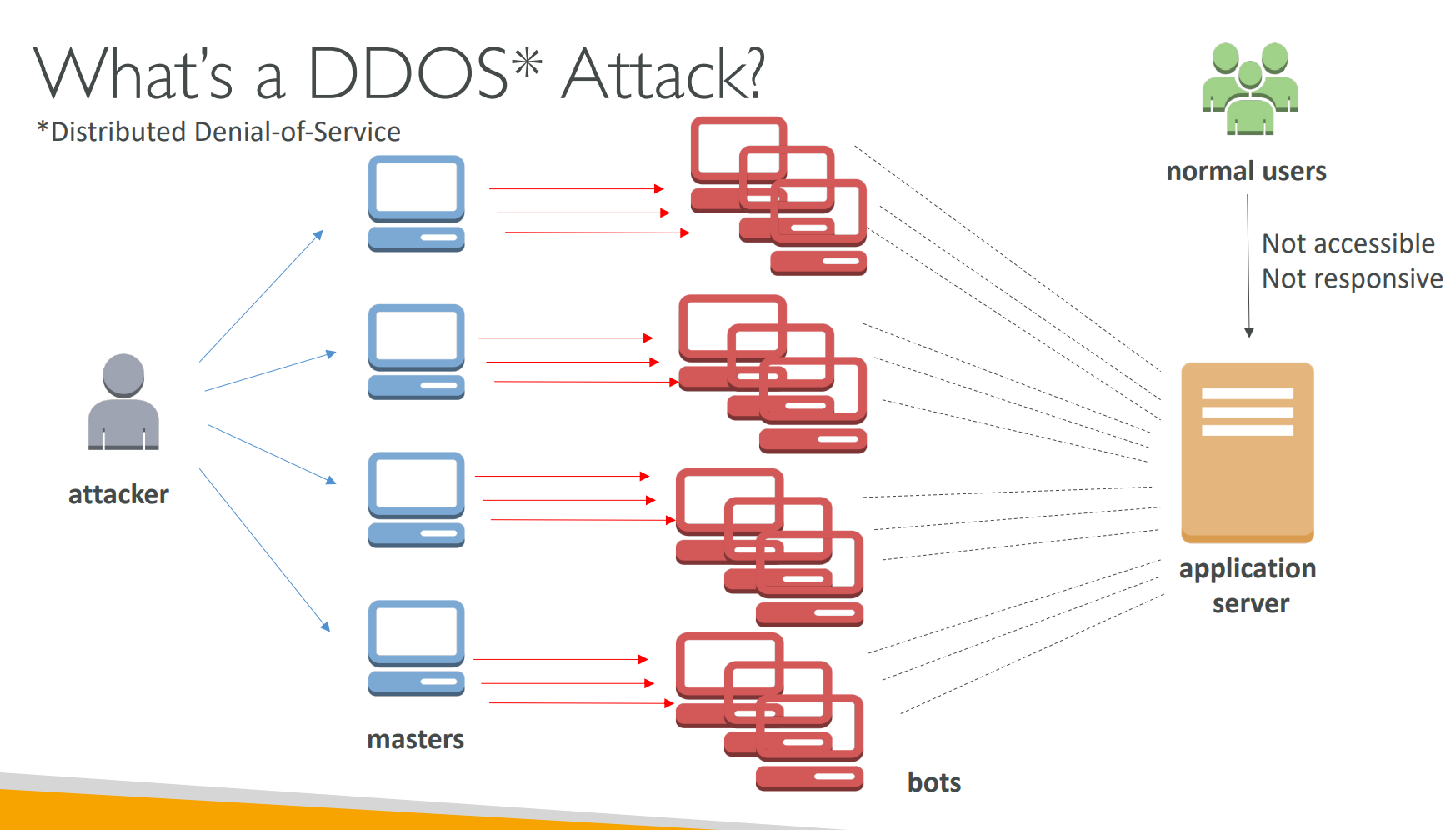
A Distributed Denial-of-Service (DDoS) attack occurs when multiple systems flood the target server with requests, overwhelming its capacity and causing downtime.
| Component | Description |
|---|---|
| Attacker | Launches control over multiple bots or compromised devices. |
| Bots | Send massive numbers of requests to the application server. |
| Impact | Server becomes unresponsive → users experience service outages. |
🧰 AWS DDoS Protection Layers
AWS offers multiple layers of defense against DDoS attacks.
| Service | Role in Protection |
|---|---|
| AWS Shield Standard | Always-on, free protection for all AWS customers against common DDoS attacks (L3/L4). |
| AWS Shield Advanced | Paid ($3,000/month/org) enhanced protection with 24/7 support and cost protection during attacks. |
| AWS WAF (Web Application Firewall) | Protects Layer 7 (HTTP/S) from web exploits like SQL injection & XSS. |
| Amazon CloudFront | Distributes and caches content globally, absorbing attack traffic at edge locations. |
| Amazon Route 53 | DNS service that is globally resilient and integrated with Shield for DDoS mitigation. |
| Auto Scaling | Automatically scales resources to handle unexpected traffic surges. |
🔐 DDoS-Resilient Application Setup
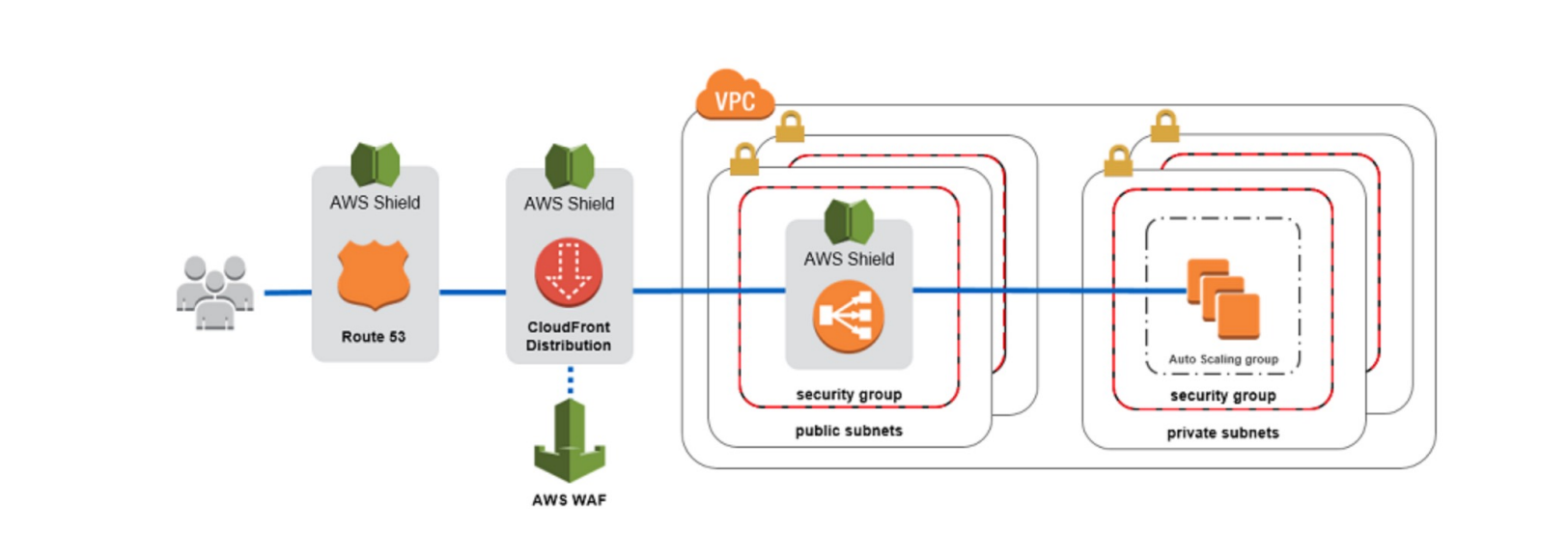
Users → Route 53 (Shield Protected) → CloudFront (Shield + Cache) → AWS WAF → Application Load Balancer → EC2 Instances (Auto Scaling Group)
✅ Benefits:
- Global edge protection using CloudFront & Route 53
- Layer 3/4 defense with Shield Standard/Advanced
- Layer 7 filtering via WAF
- Scalability during traffic spikes with Auto Scaling
🛡️ AWS Shield
| Type | Description |
|---|---|
| Shield Standard | Default, free protection for all AWS customers. Defends against SYN/UDP floods, reflection attacks, etc. |
| Shield Advanced | Paid upgrade for enhanced protection on EC2, ELB, CloudFront, Global Accelerator, and Route 53. Includes 24/7 AWS DDoS Response Team (DRT) and cost protection during attacks. |
🌐 AWS Web Application Firewall (WAF)
Protects HTTP/S applications (Layer 7) from malicious traffic.
| Feature | Description |
|---|---|
| Deploys On | ALB, CloudFront, API Gateway |
| Web ACL (Access Control List) | Collection of filtering rules applied to web traffic. |
| Rule Types | IP-based, Header-based, Body-based, SQL Injection, XSS, Geo-blocking, Size constraints |
| Rate-based Rules | Limit requests per IP to mitigate DDoS (e.g., 5 req/sec). |
🧠 5. Exam Tips
| Concept | Key Point |
|---|---|
| Shield Standard | Enabled automatically for all AWS accounts. |
| Shield Advanced | Optional, $3,000/month; includes DRT support and cost protection. |
| WAF | Works at Layer 7; supports custom filtering rules. |
| Combination | Use Shield + WAF + CloudFront + Route 53 + Auto Scaling for complete DDoS resilience. |
✅ Summary
AWS provides a multi-layered defense approach:
- Shield Standard – baseline protection (free).
- Shield Advanced – enterprise-grade DDoS defense.
- WAF – customizable rules for web exploits.
- CloudFront & Route 53 – global edge mitigation.
- Auto Scaling – elasticity during high traffic.
Together, these services ensure uptime, performance, and resilience against even large-scale DDoS attacks.